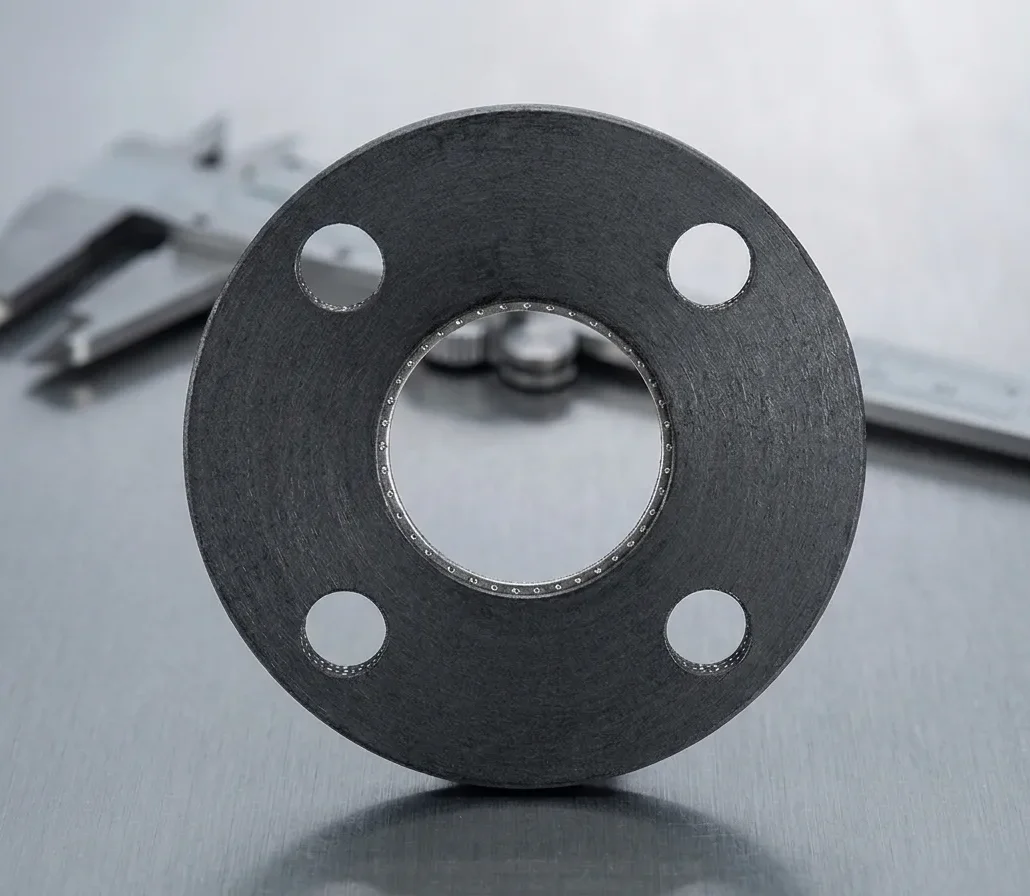
High-temperature graphite gaskets for industrial flange applications. Learn how to choose the right solution with expert support from South Eastern Gaskets.
Industrial flange joints operating under high heat do not forgive poor gasket choices. Steam lines, hot process media, and thermal cycling quickly expose material weaknesses, which is why high-temperature graphite gaskets are widely used across Australian industries. Selecting the right gasket is not about chasing a single maximum temperature figure but about understanding how material, flange design, pressure, and installation work together.
This guide breaks down what engineers and maintenance teams need to know when selecting graphite gaskets for demanding applications.
Specs That Matter in Australia: Flange Standards, Facing, and Dimensions
In Australian plants, gasket selection is closely tied to local flange standards. The most common are AS 2129 (table flanges such as Table D, E, and H) and AS 4087 (PN-rated flanges widely used in water and infrastructure projects). Each standard has its own dimensions, bolt patterns, and sealing expectations.
Matching Gasket Type to Flange Face
- Full-face gaskets are often used on AS 2129 table flanges, particularly in lower-pressure or water services.
- Ring-type gaskets (inside the bolt circle) are common in higher-pressure industrial duties.
- Spiral wound gaskets typically suit raised-face or flat-face flanges where higher bolt loads and tighter control are available.
Graphite Gasket Grades and Constructions
Graphite is available in several constructions, each suited to different operating conditions:
- Flexible Graphite Sheet Gaskets – These are cut from pure graphite sheet and used in a wide range of industrial flange applications. They are ideal for stable operating conditions where flange alignment and bolt loads are well controlled.
- Reinforced Graphite (Laminate or Tanged Insert) – Reinforced graphite sheets include a stainless steel insert to improve strength, handling, and blowout resistance. This construction is preferred for larger diameter flanges, higher pressures, or applications where installation conditions are less forgiving.
- Spiral Wound Gaskets with Graphite Filler – For severe service, spiral wound gaskets combine metal windings with graphite filler. This design offers excellent recovery and resistance to pressure and temperature cycling, making it a common choice in critical process industries.
Selection Checklist: How to Choose the Right Gasket
Before finalising a gasket, ask these key questions:
- What flange standard and size is involved? Confirm AS 2129 or AS 4087 and the exact table or PN rating.
- What are the operating temperature and pressure? Use pressure–temperature relationships rather than relying on a single maximum rating.
- What is the media and atmosphere? While graphite is broadly chemically resistant, highly oxidising environments may limit its suitability at elevated temperatures.
- What bolt load and installation method will be used? Correct compression is essential for sealing and gasket longevity.
- Is the service stable or cyclic? Cycling conditions may justify reinforced graphite or spiral wound designs.
High-Temperature Graphite Gaskets Designed for Demanding Applications
Choosing the right graphite gasket is about more than material and requires experience, standards knowledge, and a clear understanding of real operating conditions. At South Eastern Gaskets, we work closely with Australian industries to supply reliable gasket solutions for high-temperature and demanding flange applications.
Contact us and let us help you keep your operations running safely and efficiently.
Related Blog Articles:
The Advantages of Ordering Industrial Gaskets Direct from a Local Australian Manufacturer
Fire-Safe Sealing: API 607 vs ISO 10497: What Engineers Need to Know